

If you’ve ever left a job and wondered whether you could go back, you’ve already brushed up against the idea of being rehireable or rehirable. It’s a small term with a big impact on your career. Employers quietly track whether former employees are eligible to return—and that decision can influence your professional future more than you might expect.
In this article, we’ll break down what rehireable or rehirable really means, which spelling is correct, and why it matters for both employees and employers.
What Does Rehireable or Rehirable Mean?
At its core, rehireable or rehirable refers to whether a former employee is eligible to be hired again by the same company.
In simple terms:
- Rehireable: The company would consider hiring you again
- Not rehireable: The company has flagged you as ineligible for future employment
This designation is usually stored in internal HR systems and can be based on performance, behavior, or how you left the organization.
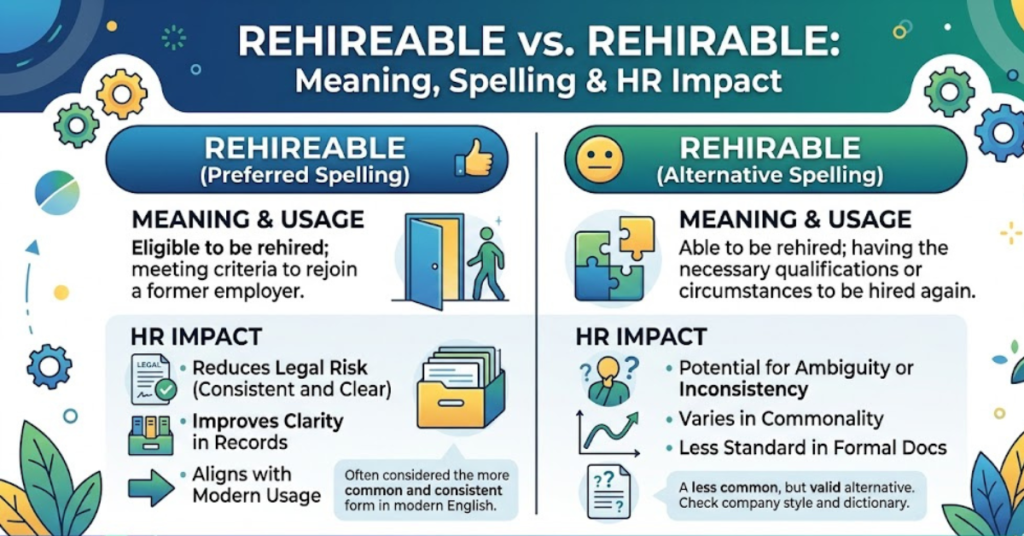
Rehireable vs. Rehirable: Which Spelling Is Correct?
Here’s where things get slightly tricky.
Both spellings exist, but:
- “Rehirable” is the more widely accepted and grammatically standard form
- “Rehireable” appears frequently in informal use and HR documents
Why Rehire Status Matters
Being labeled as rehireable isn’t just a technicality—it can shape future opportunities.
For employees:
- It keeps the door open for returning to a familiar workplace
- It signals professionalism and a positive track record
- It may influence references and background checks
For employers:
- It helps reduce hiring risks
- It saves time onboarding known candidates
- It reflects internal workforce quality
Factors That Determine If You’re Rehireable
Companies don’t randomly assign rehire status. Several factors come into play.
1. Reason for Leaving
How you exit matters a lot:
- Voluntary resignation with notice → positive
- Termination for misconduct → negative
2. Job Performance
Consistent performance and meeting expectations increase your chances of being considered rehirable.
3. Workplace Behavior
Professionalism, teamwork, and attitude all leave a lasting impression.
4. Exit Process
Leaving on good terms—like completing a proper handover—can strongly influence your status.
How to Ensure You’re Marked as Rehirable
If you want to stay on good terms with a company, a few simple steps can make all the difference.
Before you leave:
- Give adequate notice (usually two weeks or more)
- Communicate openly and professionally
- Avoid burning bridges
During your exit:
- Complete pending tasks responsibly
- Offer to train your replacement
- Participate in exit interviews constructively
After leaving:
- Stay connected with colleagues
- Maintain a positive professional reputation
Can You Change a “Not Rehireable” Status?
Yes—but it’s not guaranteed.
Possible ways to improve your chances:
- Address past issues honestly if reapplying
- Gain new skills or experience
- Reach out to former managers with a professional approach
In some cases, companies may reconsider based on growth and changed circumstances.
Common Misconceptions About Rehireable Status
“If I quit, I’m automatically rehireable”
Not always. How you quit matters just as much as why.
“This status follows me to other companies”
No—it’s usually internal to the organization, though references may indirectly reflect it.
“It doesn’t really matter”
It does, especially if you want to return or maintain strong professional networks.
FAQs
What is the correct spelling: rehireable or rehirable?
Both are used, but “rehirable” is considered more standard in formal writing.
How can I check if I’m rehireable?
You can ask HR or a former manager, though not all companies disclose this directly.
Can being not rehireable affect future jobs?
Indirectly, yes—especially if it influences references or internal industry reputation.
Do all companies track rehire status?
Most medium to large organizations do, especially those with structured HR systems.
How long does rehire status last?
It varies. Some companies keep records indefinitely, while others review them after a certain period.
Conclusion
Understanding rehireable or rehirable status is more important than it first appears. It’s not just about returning to a past job—it reflects your professionalism, relationships, and long-term career reputation.
Leaving a job the right way can keep valuable doors open. Even if you never plan to go back, maintaining a rehirable status is a smart career move that pays off in unexpected ways.
If you’re planning your next career step, take a moment to think about how you exit, not just how you enter.