
Ever noticed how some people go all-in on pleasure while others prefer restraint and balance? That contrast is at the heart of indulgent vs sober behavior. Whether you’re trying to understand personality types, improve your habits, or simply decode human behavior, this comparison offers surprising insights.
In this article, we’ll break down the indulgent vs sober meaning, explore personality traits, and explain how these tendencies show up in everyday life. By the end, you’ll have a clear, practical understanding of what it all means—and where you might fall on the spectrum.
What Does Indulgent vs Sober Mean?
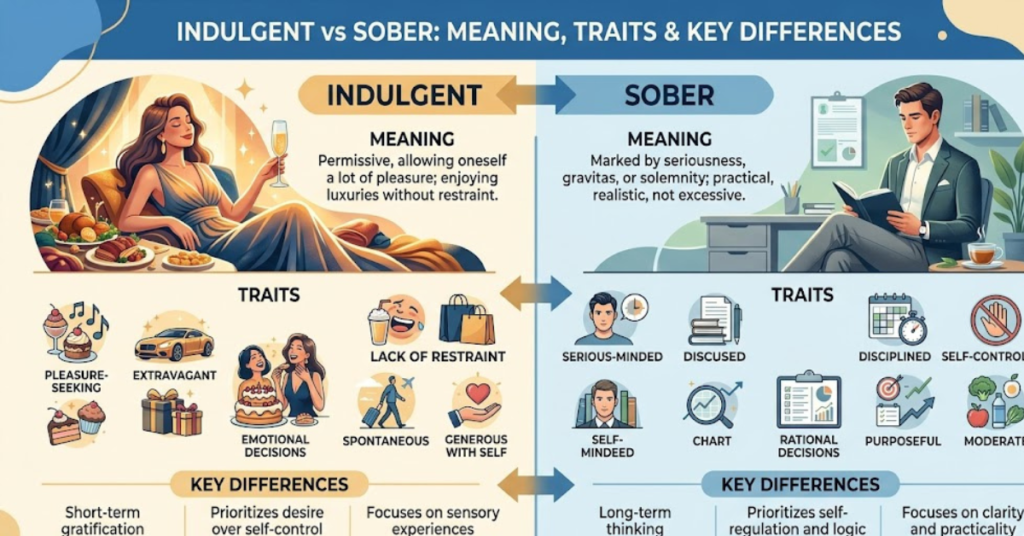
At its core, the indulgent vs sober definition is about how people approach pleasure, control, and decision-making.
- Indulgent refers to a tendency to seek pleasure, gratification, and enjoyment—often without strict limits.
- Sober reflects restraint, discipline, and a more measured or serious approach to life.
This isn’t just about alcohol or lifestyle choices—it’s a broader psychological and behavioral concept.
Simple Breakdown
- Indulgent: “I want it, I’ll have it.”
- Sober: “I’ll think about whether I should.”
Indulgent vs Sober Personality: Key Traits
Understanding the indulgent vs sober personality can help you recognize these patterns in yourself and others.
Indulgent Personality Traits
People with indulgent tendencies often:
- Prioritize enjoyment and comfort
- Act on impulse or emotion
- Seek excitement and new experiences
- Struggle with long-term discipline at times
- Value freedom over structure
They’re often seen as fun-loving, spontaneous, and expressive—but may occasionally overdo things.
Sober Personality Traits
A sober personality is typically:
- Self-controlled and disciplined
- Thoughtful before acting
- Focused on long-term goals
- Emotionally balanced
- More reserved or serious
These individuals tend to be reliable and consistent, though sometimes perceived as overly cautious.
Indulgent vs Sober Meaning in Personality Psychology
When exploring the indulgent vs sober meaning personality, it helps to think of it as a spectrum rather than a strict category.
Most people aren’t 100% one or the other. Instead, they lean toward one side depending on:
- Environment
- Upbringing
- Stress levels
- Personal goals
Example
- Someone might be indulgent with food but sober with finances.
- Another person might be disciplined at work but indulgent in social life.
This flexibility makes the concept more realistic and relatable.
Real-Life Examples of Indulgent vs. Sober Behavior
To better understand the difference between indulgent and sober behavior, consider these everyday situations:
Spending habits:
An indulgent approach often involves impulse buying, while a sober mindset focuses on budgeting and planning purchases in advance.
Social life:
Someone indulgent may seek out lively parties and spontaneous experiences, whereas a sober individual tends to prefer quieter gatherings or well-structured plans.
Health choices:
Indulgence might mean eating primarily for pleasure, while a sober approach emphasizes nutrition, balance, and moderation.
Pros and Cons of Each Approach
Neither side is “better”—both have strengths and weaknesses.
Indulgent Pros
- Enjoys life more freely
- Open to new experiences
- Emotionally expressive
Indulgent Cons
- Risk of overindulgence
- Lack of consistency
- Poor long-term planning
Sober Pros
- Strong self-discipline
- Reliable decision-making
- Better long-term outcomes
Sober Cons
- May miss out on spontaneity
- Can seem rigid or overly serious
- Risk of suppressing emotions
How to Balance Indulgent and Sober Tendencies
The ideal approach isn’t choosing one—it’s balancing both.
Practical Tips
- Set boundaries for indulgence
Enjoy pleasures, but define limits. - Practice mindful decision-making
Pause before acting impulsively. - Schedule fun intentionally
Even disciplined people need enjoyment. - Reflect regularly
Ask yourself: “Am I too rigid or too loose?”
Balance creates a lifestyle that’s both enjoyable and sustainable.
Why Understanding This Matters
Knowing the indulgent vs sober personality meaning can help you:
- Improve self-awareness
- Build better habits
- Understand others more easily
- Make smarter life decisions
It’s especially useful in relationships, work environments, and personal growth.
FAQs
What does indulgent vs sober mean in simple terms?
It describes whether someone tends to seek pleasure freely (indulgent) or practice restraint and discipline (sober).
Is being indulgent a bad thing?
Not necessarily. It becomes problematic only when it leads to excess or lack of control.
Can someone be both indulgent and sober?
Yes. Most people display a mix of both traits depending on the situation.
How do I know if I’m more indulgent or sober?
Look at your habits—especially in spending, eating, and decision-making. Patterns will reveal your tendency.
Which personality type is better?
Neither is inherently better. A balanced mix of both tends to lead to the healthiest lifestyle.
Conclusion
The idea of indulgent vs sober isn’t about labeling yourself—it’s about understanding your natural tendencies and finding balance. Indulgence brings joy and excitement, while sobriety offers stability and control. The real goal is to combine both in a way that works for your life.
If you’re looking to grow, start by noticing your patterns. Then adjust—just enough—to create a life that feels both fulfilling and grounded.