

If you’ve ever paused mid-sentence wondering “is timeframe one word?”, you’re not alone. It’s one of those small grammar details that can quietly trip up even confident writers. Whether you’re writing emails, reports, or blog posts, getting this right matters more than you might think.
In this article, we’ll break down is timeframe one word or two, explain why the confusion exists, and show you how to use it correctly every time—without overthinking it.
Is Timeframe One Word or Two?
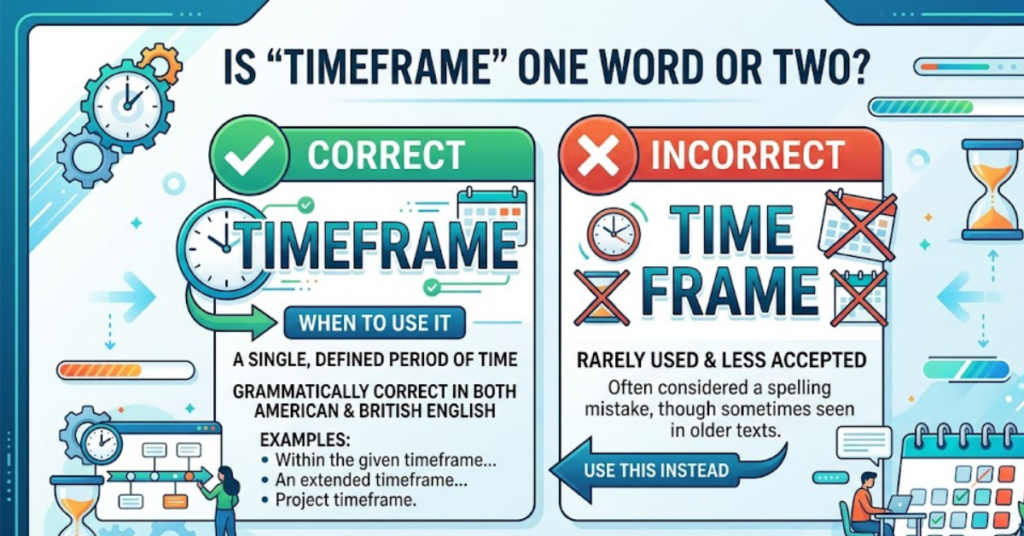
The short answer: “timeframe” is most commonly written as one word.
Modern English usage strongly favors “timeframe” as a single, closed compound word. You’ll see it used this way in:
- Business writing
- Academic papers
- Professional communication
So if your question is is timeframe one word or two words, the safest and most widely accepted choice today is:
Timeframe (one word)
Why Do People Still Write “Time Frame”?
The Evolution of Compound Words
English is constantly evolving, and compound words often go through stages:
- Open form – time frame
- Hyphenated form – time-frame
- Closed form – timeframe
“Timeframe” has largely completed this transition into the closed form, but older usage still lingers. That’s why some people still ask is timeframe one word or 2.
Is “Time Frame” Still Correct?
Technically, yes—but it’s less preferred.
You might still see “time frame” (two words) in:
- Older textbooks
- Formal or traditional writing styles
- Certain regional preferences
However, in modern usage, especially online and in business writing, “timeframe” is the standard.
When Should You Use “Timeframe” as One Word?
To avoid confusion, stick with “timeframe” (one word) in most situations, including:
Professional Writing
- Project deadlines
- Reports
- Emails
Everyday Communication
- “What’s the timeframe for delivery?”
- “We need a clear timeframe for this task.”
Common Mistakes to Avoid
When people wonder is timeframe one word or two?, they often make small but noticeable errors. Here are a few to watch for:
- Mixing both forms in the same document
- Using “time frame” in modern business writing
- Adding a hyphen unnecessarily (“time-frame”)
Tip: Pick one style—preferably “timeframe”—and stay consistent.
Quick Grammar Rule to Remember
If you’re ever unsure about is timeframe one word or two words, use this simple rule:
Default to “timeframe” as one word in modern writing.
It’s widely accepted, easy to read, and rarely questioned.
Examples of Correct Usage
Here’s how “timeframe” should look in real sentences:
- “We need to finalize the project within this timeframe.”
- “The expected timeframe is two to three weeks.”
- “Let’s agree on a realistic timeframe before starting.”
Read also <<< Wedding Wishes & Anniversary Messages: Heartfelt Ideas
FAQs
1. Is timeframe one word?
Yes, “timeframe” is generally written as one word in modern English.
2. Is timeframe one word or two?
While both exist, one word (“timeframe”) is preferred today.
3. Is timeframe one word or two words in formal writing?
Most modern formal writing uses “timeframe” as one word, though “time frame” may still appear occasionally.
4. Is timeframe one word or 2 in British vs. American English?
Both British and American English now commonly use “timeframe” as one word.
5. Is timeframe one word or two words grammatically correct?
Both forms are technically correct, but “timeframe” is the standard modern usage.
6. Should I ever use “time frame”?
You can, but it’s best reserved for older or stylistically traditional contexts.
Conclusion
So, is timeframe one word? In modern English, the answer is a clear yes. While “time frame” hasn’t completely disappeared, it’s no longer the preferred form in most writing contexts.
To keep your writing clean, consistent, and up to date:
- Use “timeframe” (one word)
- Avoid switching between styles
- Stick with modern conventions
If you’re aiming for polished, professional writing, this small detail can make a surprisingly big difference.