
Ever found yourself typing lieing and wondering if it looks… off? You’re not alone. The confusion around lieing or lying is incredibly common, and it stems from how tricky English spelling rules can be.
In this article, we’ll break down the lieing or lying meaning, explain which spelling is correct, and show you how to use it confidently—whether you’re talking about resting in bed or not telling the truth.
What Is the Correct Spelling: Lieing or Lying?
Let’s clear this up right away:
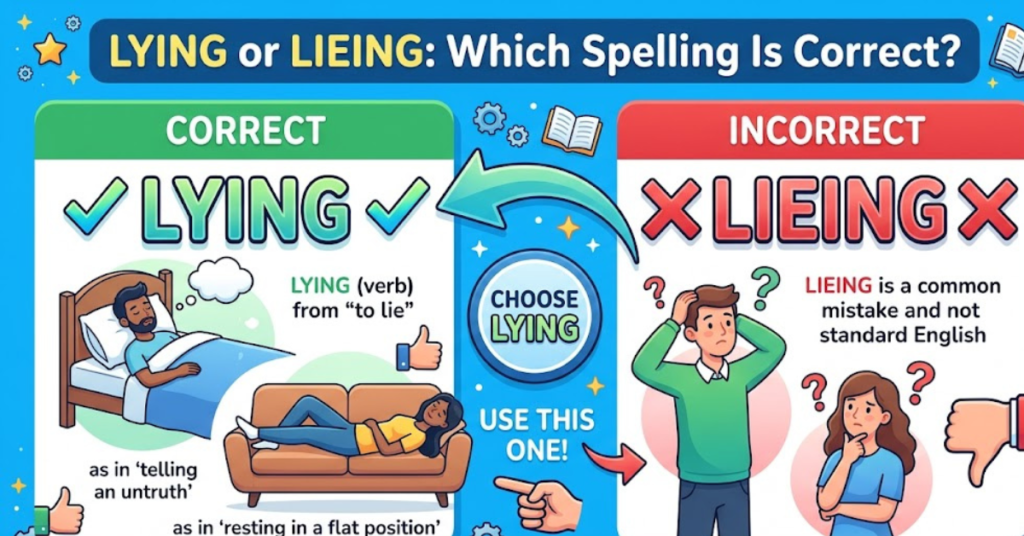
“Lying” is correct
“Lieing” is incorrect
So if you’re asking, is it lieing or lying?—the answer is always lying.
Why “Lying” Is Correct
The verb lie changes form when adding -ing. Instead of simply adding “-ing” to become lieing, English drops the “e” and changes the “ie” to “y”:
- Lie → Lying
- Die → Dying
- Tie → Tying
This is a standard spelling rule in English, not an exception.
Lying Meaning: Two Different Uses
The word “lying” can actually mean two different things depending on context.
1. Lying (Not Telling the Truth)
This is the most common use.
Examples:
- He was lying about where he went.
- She admitted to lying during the interview.
Here, “lying” means being dishonest.
2. Lying (Resting or Reclining)
It can also refer to being in a horizontal position.
Examples:
- She is lying in bed reading a book.
- He spent the afternoon lying on the couch.
In this case, “lying” means reclining or resting.
Lieing or Lying Definition (Simple Explanation)
If you’re looking for a quick lieing or lying definition, here it is:
- Lying (verb):
- Telling something untrue
- Resting in a flat or relaxed position
- Lieing: Not a valid word in standard English
How to Spell Lieing or Lying Correctly
If you’re unsure about the spelling of lieing or lying, remember this trick:
If the word ends in “-ie,” change it to “-y” before adding “-ing.”
Quick Rule:
- Lie → Lying
- Not: Lieing
This answers questions like:
- how do you spell lieing or lying
- spell lieing or lying
- is lieing or lying spelling correct?
Lying vs Lieing: Common Mistakes
Here are a few mistakes people often make:
- Writing lieing down instead of lying down
- Typing lieing in bed instead of lying in bed
- Using lieing in formal writing (which can hurt credibility)
Correct Usage Examples
- She is lying down after a long day.
- He was lying about the results.
- She is lieing down
Lie, Lay, and Lying: Quick Clarification
To avoid confusion, here’s a simple breakdown:
- Lie (present): I lie down
- Lying (present participle): I am lying down
- Lay (past tense): Yesterday, I lay down
And remember:
- “Lay” usually needs an object (e.g., lay the book down)
- “Lie” does not (e.g., lie down)
Lieing or Lying UK vs US Usage
If you’re wondering about lieing or lying UK vs US differences—good news:
There is no difference
Both British and American English use “lying” as the correct spelling.
Why Do People Write “Lieing”?
The confusion often comes from:
- Overgeneralizing spelling rules (just adding “-ing”)
- Pronunciation (it sounds like it could be spelled ie)
- Lack of awareness of the “ie → y” rule
It’s a small mistake—but an important one to fix.
Quick Summary: Lieing or Lying?
Here’s a simple recap:
- Correct: Lying
- Incorrect: Lieing
- “Lying” means:
- Not telling the truth
- Reclining or resting
Read also <<< Happy New Year Wishes 2026: Unique Messages & Quotes
FAQs About Lieing or Lying
1. Is it lieing or lying?
It is always lying. “Lieing” is incorrect.
2. What is the meaning of lying?
“Lying” can mean:
- Being dishonest
- Resting in a horizontal position
3. How do you spell lieing or lying correctly?
The correct spelling is lying. Drop the “e” and change “ie” to “y.”
4. Why is lieing wrong?
Because English spelling rules require changing “ie” to “y” before adding “-ing.”
5. Can lying mean both resting and being dishonest?
Yes. Context determines the meaning:
- “Lying in bed” = resting
- “Lying to someone” = not telling the truth
Conclusion
Getting lieing or lying right might seem like a small detail, but it makes a big difference in clear and polished writing. The correct form—lying—follows a simple spelling rule that applies to other words too.
Now that you know the difference, you can confidently use the right form whether you’re describing someone lying in bed or lying not telling the truth.
If you want to sharpen your writing further, keep exploring common grammar mistakes—they’re often the fastest way to improve your language skills.