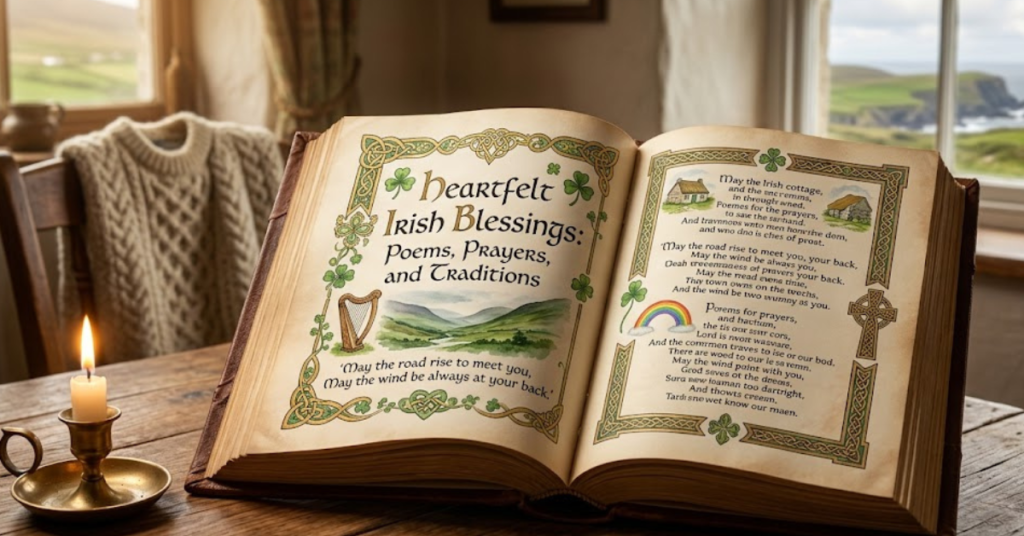

Irish blessings have long been treasured as expressions of goodwill, hope, and love. Whether whispered at weddings, shared at funerals, or recited in daily life, an Irish blessing carries warmth and timeless wisdom. In this article, we explore the history, meaning, and variety of Irish blessings, including famous prayers, poems, and traditional sayings like “May the road rise up to meet you.”
What Is an Irish Blessing?
An Irish blessing is a short prayer, poem, or saying that conveys good wishes, protection, or encouragement. Rooted in Irish culture, these blessings often reference nature, family, friendship, and spiritual guidance. They are both poetic and practical, designed to uplift the heart while offering comfort.
Key Characteristics of Irish Blessings:
- Short and memorable
- Poetic language with natural imagery
- Convey love, health, safety, or happiness
- Suitable for weddings, funerals, or everyday use
Famous Irish Blessings and Their Meanings
1. The Classic Road Blessing
“May the road rise up to meet you, may the wind be always at your back…”
This is perhaps the most famous old Irish blessing, often recited at weddings or farewells. It symbolizes a safe journey through life and encouragement for overcoming challenges.
2. Irish Blessing for Weddings
Weddings are a perfect occasion for Irish blessing prayers. Common blessings include wishes for joy, harmony, and long-lasting love:
- “May your joys be as deep as the ocean and your troubles as light as its foam.”
- “May love and laughter light your days, and warm your heart and home.”
3. Irish Blessing for Funerals
At funerals, the Irish blessing funeral provides comfort and peace:
- “May the winds of heaven blow softly and whisper in your ear, how much we love and miss you here.”
- “Until we meet again, may God hold you in the palm of His hand.”
4. Traditional Irish Blessings and Poems
Many traditional Irish blessings are passed down orally, often in the form of short poems or rhymes:
- “May your troubles be less and your blessings be more, and nothing but happiness come through your door.”
- “An Irish blessing is like a sunbeam, shining light into the darkest days.”
Why Irish Blessings Are Still Popular Today
Irish blessing poems and prayers remain widely used because they are:
- Timeless: Their messages of hope and love resonate across generations.
- Versatile: Perfect for weddings, funerals, birthdays, or even daily inspiration.
- Universal: Their themes—safety, joy, love, and prosperity—appeal to people of all cultures.
How to Use an Irish Blessing
Using an Irish blessing is easy and meaningful:
- Write it in a wedding card or speech.
- Include it in funeral programs or memorial notes.
- Frame it as a wall decoration or gift.
- Recite it during moments of reflection or prayer.
Tip: Personalize your blessing to make it more heartfelt, adding names or specific wishes for the recipient.
Frequently Asked Questions FAQs
Q1: What is the most famous Irish blessing?
The most recognized is “May the road rise up to meet you, may the wind be always at your back…” used for farewells, weddings, and graduations.
Q2: Can Irish blessings be used at funerals?
Yes, many blessings provide comfort and peace, offering hope and spiritual support to grieving families.
Q3: Are Irish blessings always religious?
Not necessarily. While some invoke God, many blessings focus on love, health, and nature without specific religious references.
Q4: What makes a blessings ‘Irish’?
Irish blessings are characterized by poetic language, natural imagery, and traditional cultural wisdom passed down through generations.
Q5: How can I write my own Irish blessings?
Combine positive wishes with imagery from nature, keep it short and poetic, and use a friendly, heartfelt tone.
Conclusion
Whether for a wedding, funeral, or just to brighten someone’s day, an Irish blessing is a timeless way to share love, hope, and encouragement. From the classic road blessing to modern interpretations, these prayers and poems connect us with generations of wisdom. Explore more Irish blessings to add a personal touch to your next card, speech, or meaningful gift.